
Insights on the Proposed Grassy Mountain Coal Mine
Lorne Fitch, P. Biol.
As Northback provides more information on their proposed Grassy Mountain coal
mine, the truth behind their promotional hype gets clearer. This was
demonstrated in a public information session hosted by Northback in the
Crowsnest Pass on January 13, 2026. Coincidentally, this took place just a few days
before the deadline closed for people to comment on the proposed terms of
reference for the mine’s environmental impact assessment.
First, Northback clearly does not want the federal government to participate in
any regulatory hearing. The federal government has shown itself to be less
compliant to industry in hearings than the provincial Alberta Energy Regulator,
seen by many as a captured agency.
A joint federal/provincial hearing ensures there will be the opportunity for an
objective review and full participation by those who oppose the mine for
environmental, economic, health, and social issues. Our provincial government,
through the AER has a habit of excluding all but those who it deems “directly
affected.” Typically, downstream water users and drinkers are not deemed
“directly affected.”
Federal involvement would be triggered by several bits of legislation —
The Impact Assessment Act, Fisheries Act, Environmental Protection Act, Species at Risk Act, and arguably Aboriginal and Treaty Rights.
Second, it is evident now that Northback never had any intention of meeting the
current scientific standards for selenium release from the mine, let alone
acknowledging the promises from the premier, the minister of Energy and the
environment minister that no mine would be permitted unless there was zero
discharge of selenium. Instead, Northback is lobbying for a change in the standard
for selenium release, following a tried and true industry strategy of, “If you can’t
make the grade, lower the standard.”
The limits proposed by Northback are 5 -10X higher than current aquatic health
thresholds for selenium. These new limits are not science-based standards based
on evidence. The coal industry wants a change to what is technologically and
economically feasible for industry to operate a profitable mine, not what is
required to protect water quality, fish, and the aquatic environment.
A contention that background selenium levels from the legacy mine on Grassy
Mountain aren’t a problem evaporate when the evidence of high levels in trout
flesh from Gold and Blairmore creeks is reviewed. This was documented by Benga,
the precursor to Northback.
Third, the promise that overburden would not be dumped in stream valleys is
acknowledged as untenable. Mine experts point out that at least a third of the
excavated volume of waste rock will have to be disposed of outside of the mine
pit. This calls into question the already questionable selenium reduction strategy
of “layering.”
Piles of overburden, subject to wind and water erosion are a source of selenium
and sediment, a further cumulative impact on water quality affecting aquatic life
and threatened trout species in Gold and Blairmore creeks.
Fourth, secrecy surrounds both the ability to control runoff water on the mine site
as well as what are the mine requirements for water. The reasons are probably
strategic. If the standards for selenium are changed Northback probably thinks it
can eliminate a costly water treatment facility and settling ponds. Any assessment
of mine water requirements will likely show severe reductions on stream flow in
Gold and Blairmore creeks, to the detriment of native cutthroat trout subject to
the Species at Risk Act.
Northback is employing the same smoke screen of dodge and twist, prevaricate
and promise, financial inducements and backroom lobbying, all the while pushing
a mine proposal that has unresolved and significant issues. These issues were
adjudicated in a previous federal/provincial hearing in 2021. The panel soundly
rejected the mine proposal.
As more and more of the “new” mine proposal emerges, it will become increasingly
evident this is the old mine proposal dressed up to appear different. No one
should be fooled.
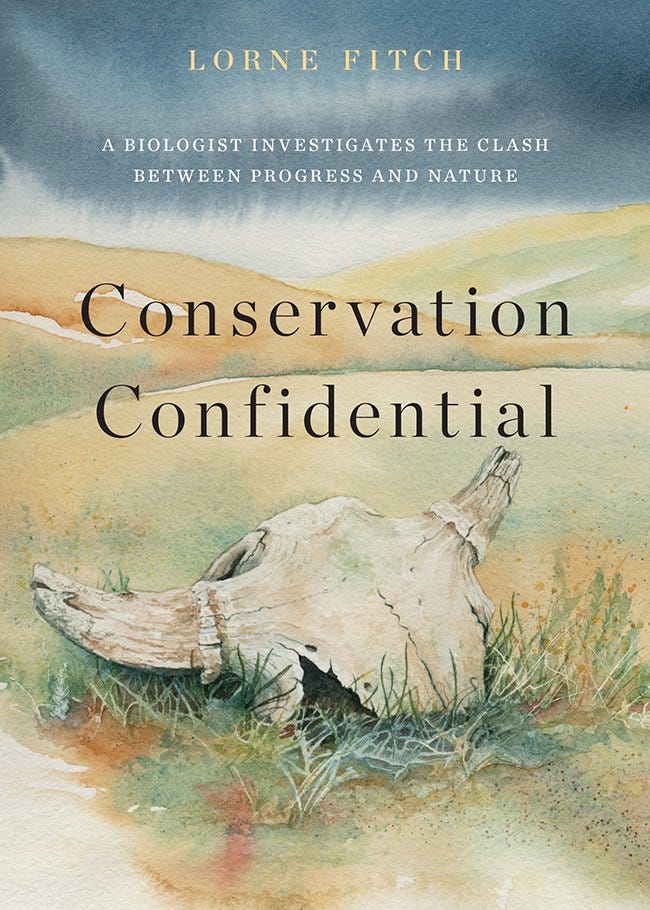
Lorne Fitch is a Professional Biologist, a re5red Fish and Wildlife Biologist, and a
past Adjunct Professor with the University of Calgary. He is the author of Streams
of Consequence, Travels Up the Creek, and Conservation Confidental.
Northbacks' proposal is almost identical to it's original one, with some small modifications on size and what have you. It is simply putting "lipstick on another pig"...and should be rejected as the first one was in 2021. Time to close the chapter on this "welfare scheme".