
Lorne Fitch, P. Biol.
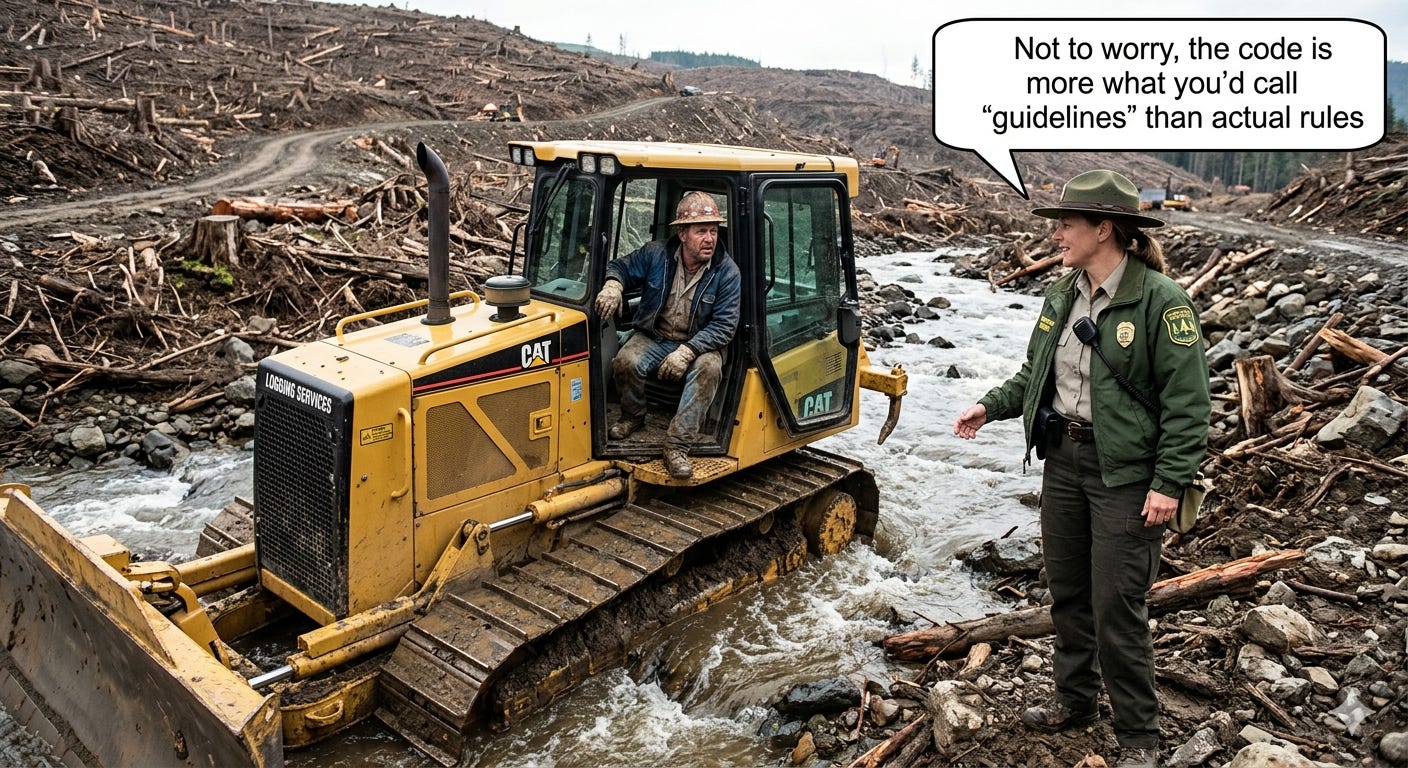
Like many, I grew up with the notion the Alberta forestry rangers were the guardians and gatekeepers of our forests, protecting them from the avarice of the timber industry. It turns out, in today’s world, the timber industry and Alberta Forestry and Parks are best buddies.
I’ve tracked logging over many years. To no avail, I have reported issues of insufficient stream buffers, poor road layout, inadequate sediment controls, massive erosion into trout streams, and reduced trout spawning. Nothing changes and given a recent 30 per cent increase in logging, gotten even worse.
The Alberta Wilderness Association undertook a review of logging practices in 2025.
Observations at 496 sites in selected watersheds of the Oldman River headwaters showed 667 failures to follow the province’s timber harvest operating ground rules, the federal Fisheries Act, and the Species At Risk Act.
Vegetated riparian buffers, to separate streams from logging effects, were either cut over and missing, or were not wide enough to meet guidelines for stream protection. Erosion controls to minimize sediment reaching critical trout habitat were either missing, ineffective, or lacked even basic maintenance—this affected 87 per cent of the stream crossings.
The sheer number of infractions suggests this is beyond a few lapses. Instead, this is abject carelessness and disregard for other forest values, especially related to trout species that are imperilled and designated “threatened”.
Those figures might tell you all you need to know about how the province and the federal government fail to apply regulatory oversight and enforcement to logging operations on public land.
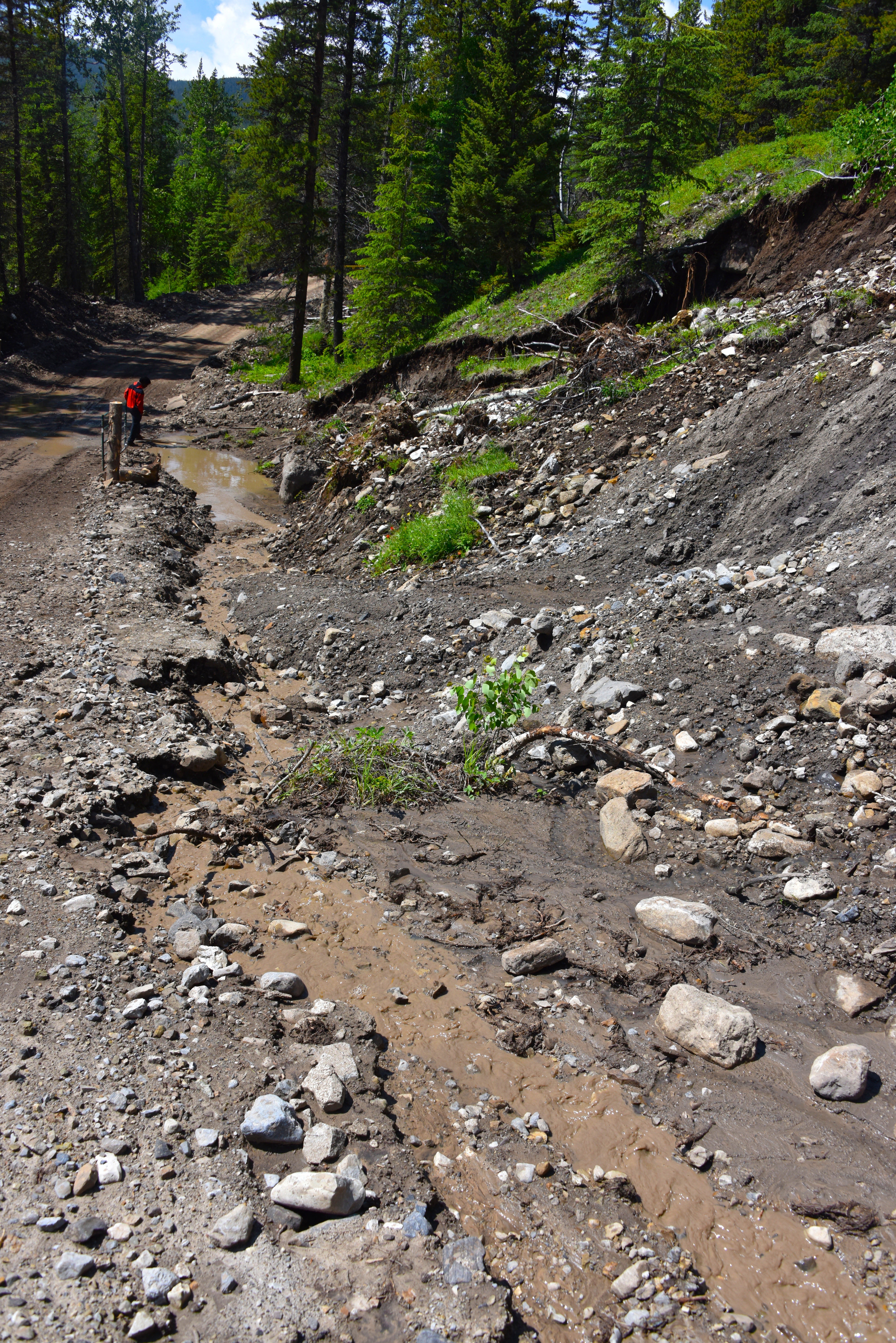
The inability of industry to meet even the minimal provisions of provincial guidelines is strikingly problematic. It strongly suggests the timber industry is incapable of self-regulation.
One can endlessly parse these results in terms of impacts on water quality, native trout, wildlife, aesthetics, recreation, and hydrologic alterations to the headwaters forest sponge that captures, stores, and slowly releases water for downstream users. Research documenting logging impacts is unequivocal. It is not a question of a lack of evidence-based understanding. Instead it is industry economic self- interest, aided and abetted by government acquiescence and connivance.
The timber industry and Forestry and Parks will tell you there is a tightly scripted set of operational rules for logging. If there is any science, any empirical information from research and monitoring behind these claims the “rules” protect other forest values, Forestry and Parks is unable to provide it for an objective review.
In reality, the timber harvest operating ground rules are a set of weak administrative guidelines subject to substantial interpretation, tinkering by the industry the rules are supposed to guide, allowance of deviations to accommodate logging, no effectiveness monitoring, and unclear legislative penalties for failure to adhere to them.
This has created a culture of complacency and permissiveness. Failures of adherence to the operating ground rules are seen as “non-penalty” items, where there is a reluctance to enforce, possibly because the timber industry and the government regulators think the infractions are too trivial to deal with.
Meanwhile, what we thought was being protected— trout habitat, water quality, and watershed hydrological stability— all diminish under their not-very-watchful eyes. It starts and continues with the insidious lobbying effort by the timber industry.
From October 2020 to January 2024 the Alberta Forest Products Association (AFPA), the industry lobby group, met with federal government officials 83 times; 42 (51%) of those meetings have included the topic “Fisheries” and 35 of those meetings were with Department of Fisheries and Oceans (DFO). Over that time, meetings included 40 different DFO staff, ranging from deputy ministers to fish habitat biologists.
While it is normal for an industry association to lobby government on behalf of its members, it is striking how such a large proportion of the AFPA lobbying effort is focused on fisheries and Species at Risk Act topics. What’s more, the number of meetings the AFPA has requested, and received, with DFO has notably increased recently as protection mechanisms for species at risk trout have been implemented.
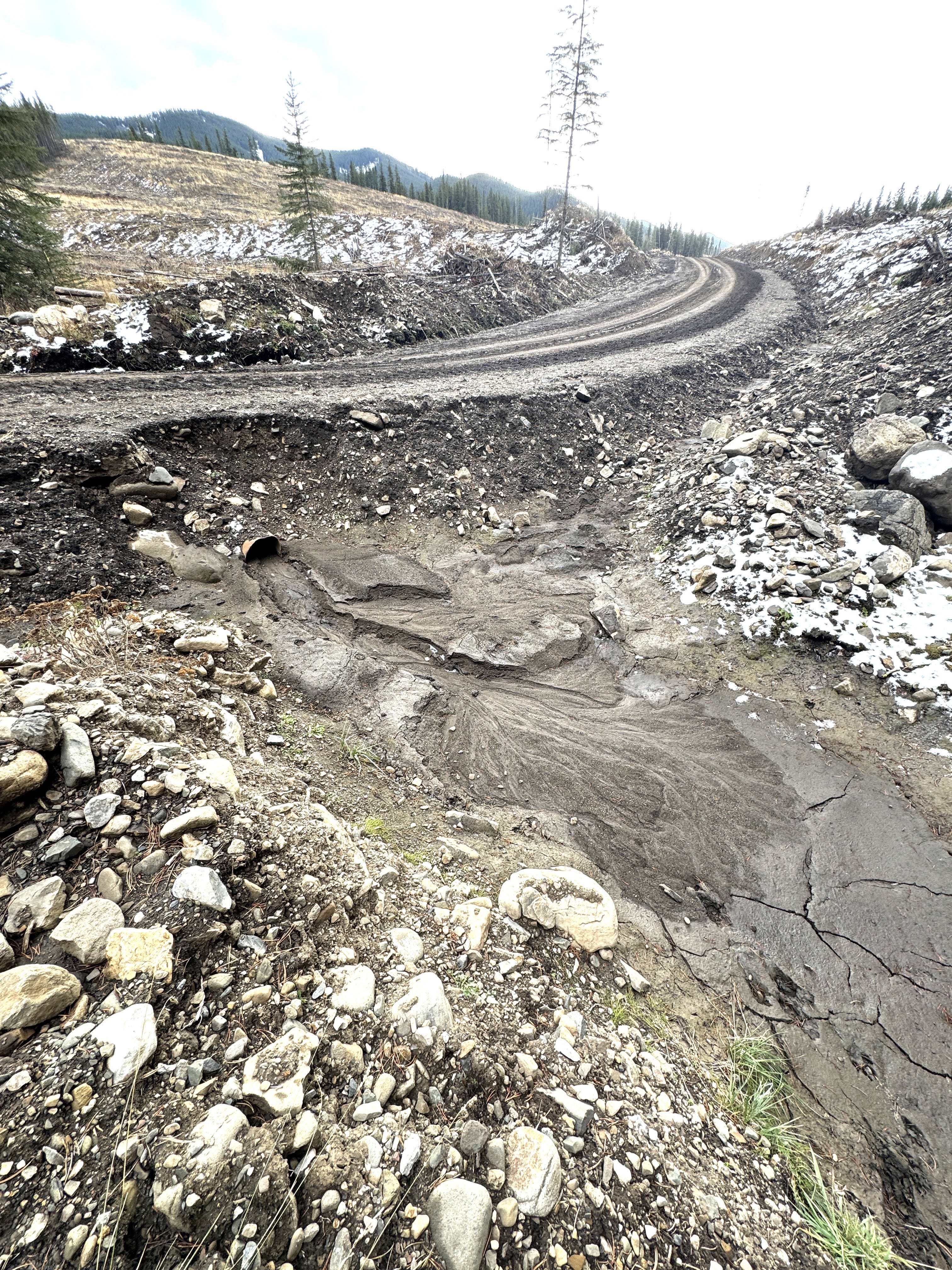
Lobbying efforts by the AFPA must be paying off. Instead of DFO requiring the industry to follow the strict provisions in federal legislation, they are now issuing permits to allow the destruction of critical trout habitat. In a perverse effort to avoid the provisions of the legislation DFO directs industry to undertake some perfunctory compensatory actions.
Worse yet, the mitigation features observed are cosmetic, unsuitable, and incapable of any meaningful compensation for lost habitat. Mitigation is used as an administrative panacea, not an effective ecological solution to the issues of habitat loss for species at risk trout. It’s treated as a “get-out-of-jail-free” card.
For the trout the reality is the rules are weak suggestions, creating the most minimal of impediments to logging. Forestry and Parks uses “deviations” from the operating ground rules as stepping stones to avoiding getting wet in the river of responsibility to protect both biodiversity and watershed values. DFO offers up some cosmetic mitigative suggestions to permit destruction of critical habitats. Logging interests lobby regulators to ensure “if the minimum is set low enough we cannot fail.”
Forestry and Parks cannot effectively provide oversight since they are part of the problem. It is impossible to simultaneously allocate timber, promote logging, and provide effective management and enforcement. Even as policy and regulations are touted as strong, accountability is a loose thread that unravels the contention that the forests are subject to effective environmental protection and oversight.
A forest industry representative claimed, “We follow all the guidelines, maintain buffer zones, carefully engineer roads, and logging isn’t a problem for species.” Mostly, they work all the angles to ensure there are few impediments to logging.
Forestry is corrupt in Alberta because logging practices are set largely by industry to maximize short-term profits at the expense of forests owned by the people of Alberta.
Industry spokespeople, provincially and nationally, say they act as “proud stewards” of forests and wild critters by cloaking themselves in a faux-green mantle of sustainability. The evidence tells another story, that they are emperors without clothes, naked and greedy.
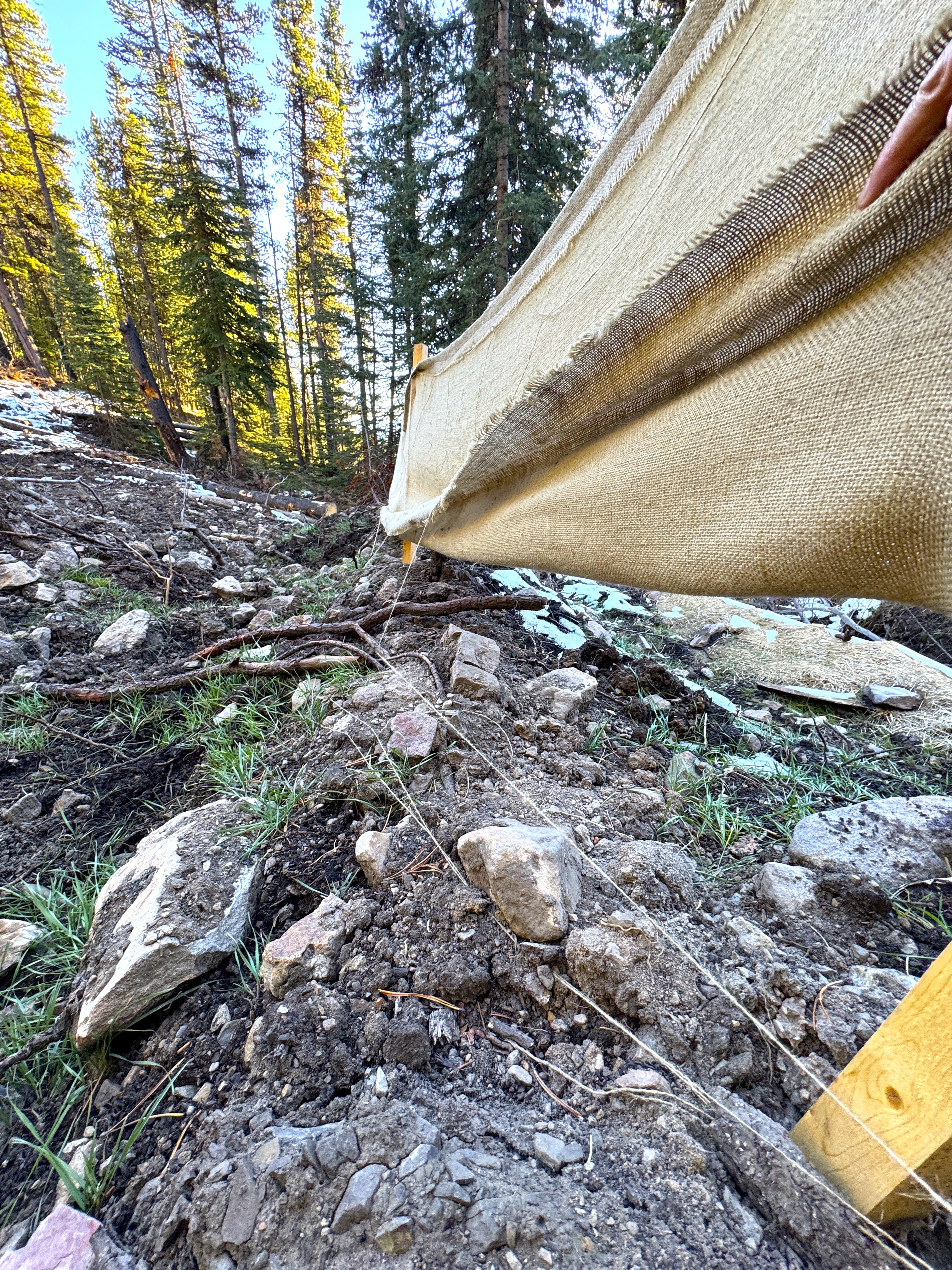
See, our sediment barriers work just fine. (Lorne Fitch)
To counter the relatively fact-resistant response of the industry and Forestry and Parks, here are some take home messages on the eight deadly sins of industrial-scale forestry:
Clear-cut logging increases downstream flood risk and exacerbates drought.
Many fish and wildlife species and their habitats are harmed.
Water quality deteriorates.
Logging does not stop wildfires.
Sustainable logging is a fairy tale.
Despite the scale of logging no environmental impact assessments are required.
Environmental rules are watered down to benefit the timber industry.
There is little or no regulatory oversight or enforcement.
There may be a pattern of psychological factors at play that lead to these persistent environmental issues with logging. These factors are generally described by Dr Julia Shaw, a criminal psychologist, in her book Green Crime. They are: ease, impunity, greed, rationalization, and conformity. There is a tendency to follow a path of least resistance ignoring obvious compliance issues. With no penalty for compliance failures, there is no incentive to change. Breaking rules saves industry money. If there is a sense non-compliance isn’t harmful, it will persist. Lastly, if political and corporate pressure is applied to maximize economic returns over environmental protection, staff will fall in line and either not follow the rules or not uphold them.
What is required, and in little evidence, is avoidance of issues through better harvest layout, reductions in clear-cut sizes, and improved oversight. This is unlikely to happen until effective and probably punitive enforcement efforts create a pathway for change.
A parking ticket isn’t a crime—it’s an administrative fine. That’s also how serious environmental infractions are viewed—a parking ticket with a few more zeros added. In our forests a stream might run brown like gas station coffee and perhaps as deadly with mud from a poorly constructed logging road. Trout might have their essential habitats smothered by the sediment, or wiped out by floods from too much logging. Administrative penalties for these issues nets even less than the overdue book fines from a library.
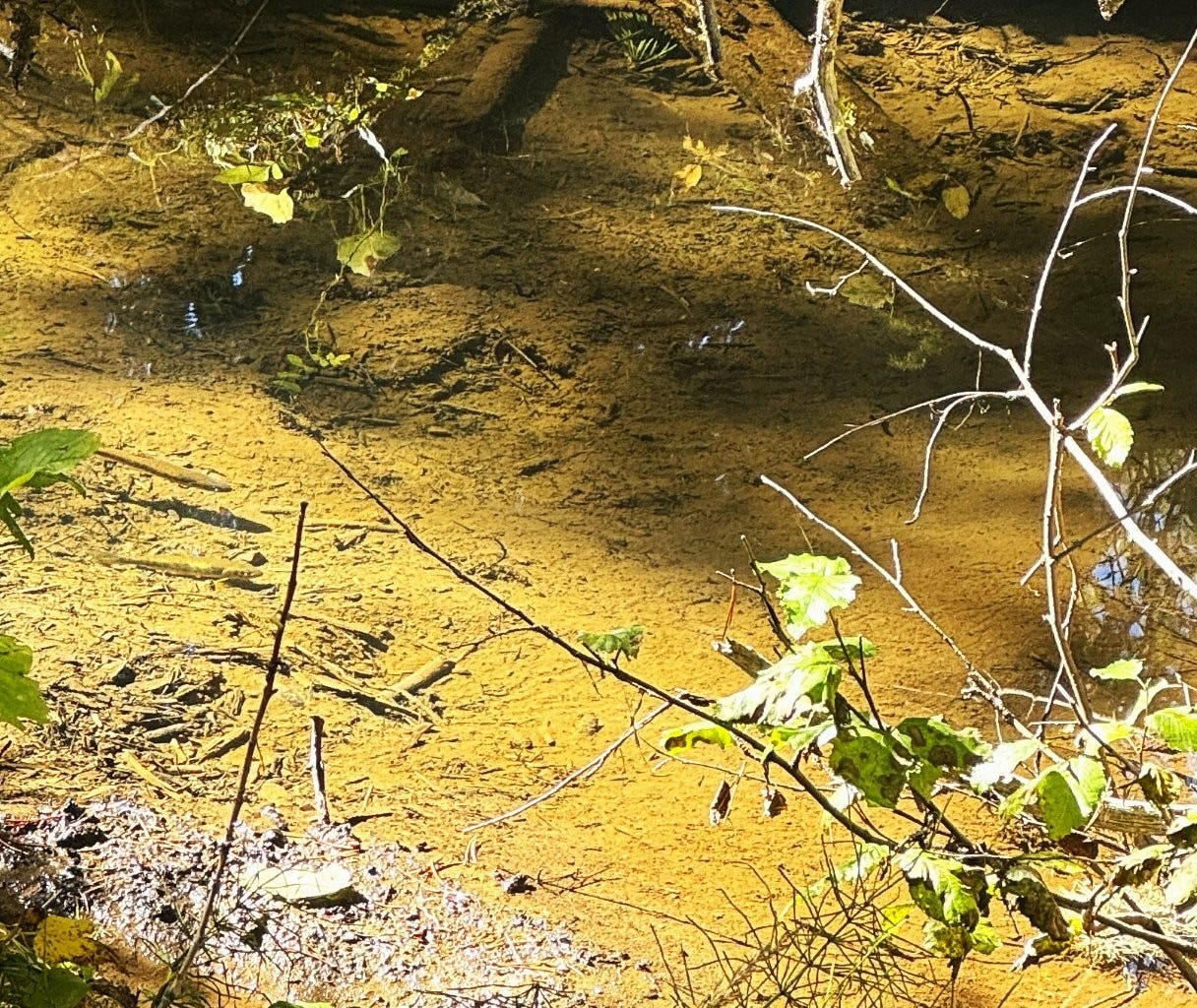
Even if a financial penalty is assessed it’s an insignificant portion of the company’s earnings. Malefactors treat this as a business expense, cheaper in the long run than following the rules. There’s little reputational downside, perhaps some fleeting public disparagement, but no deterrent for repeat offences.
There is a virtual vacuum of enforcement. Until these offences are viewed and treated as environmental crimes, little is likely to change except a progressive diminishment of our environment. The regulatory system is currently more third world than world-class.
Forests of the Eastern Slopes are part of our heritage, a legacy, and a public good. They require responsible use and protection—not capture by special economic interests.
If the fault lies in an outdated policy that treats forests as fiber, then the solution must be one of managing for forest values—all forest values. New policy would be informed by science, the precautionary principle, and not solely by economic drivers. It would ask for more stringent regulations that focus on ecological health and restoration—not minimal standards to facilitate logging.
From the Alberta Wilderness Association review of logging it must be clear, to most except the ecologically blind and economically powerful, that we cannot continue into the future with an outdated policy apparatus for our Eastern Slopes forests.
Lorne Fitch is a Professional Biologist, a retired Fish and Wildlife Biologist and a former Adjunct Professor with the University of Calgary. He is the author of Streams of Consequence, Travels Up the Creek, and Conservation Confidential.
Crowsnest Headwaters appreciates your donations to help fund our projects. We do engage politically when appropriate and thus do not qualify for charitable status. Your donations help pay for equipment and communications services. Nobody benefits personally. You may make a donation via Interac eTransfer to “funding@crowsnestheadwaters.ca”