
Dear readers.
Amid the ongoing Substack posts and, at times, extended silences, there is still a lot going on behind the scenes with some definite progress forward. It requires not only a lot of time but even more patience. When we get positive feedback from lawyers it definitely props us up again.
However, as an example of what continues to instill more frustration in trying to understand the dancesteps of government, I give you the following which I hope you will take a few minutes to read.
One advocate initiated a communication with Julie Debrusin, Minister of Environment and Climate Change. Here is part of that letter:
“What is your responsibility for the contamination of our fresh waterways as a result of open pit coal mining in the eastern slopes of the Rockies in Alberta? Do you supersede the provincial regulations?
We have seen the lax monitoring and regulating of damaging chemicals in our fresh water. We have seen the long-term effects of coal dust and selenium contamination, which will only get worse with this acceptance of the open pit coal mine. What say do you have with its acceptance if you had a say five years ago and rejected the same project?
Thank you. Janet Wees”
As for the response to Janet, here are a few excerpts from the Canadian Fisheries Act for reference to the reply she received.
According to the Fisheries Act:
Deleterious substances
What are they?
“A deleterious substance can be any substance that, if added to any water would degrade or alter the water quality such that it could directly or indirectly harm fish, fish habitat, or the use of fish by humans.”
“Deleterious substances include substances that could cause lethal or sublethal effects to fish. These effects may include impacts, for example, on growth, respiration, reproduction, larval survival, or normal development.”
“ . . . tests are designed to determine whether or not the fish will die when exposed to a particular substance, or mixture of substances such as effluent, for a specified time period. Other tests could be used as well, such as sublethal tests that measure whether an effluent affects parameters such as the growth or reproduction of the test species.”
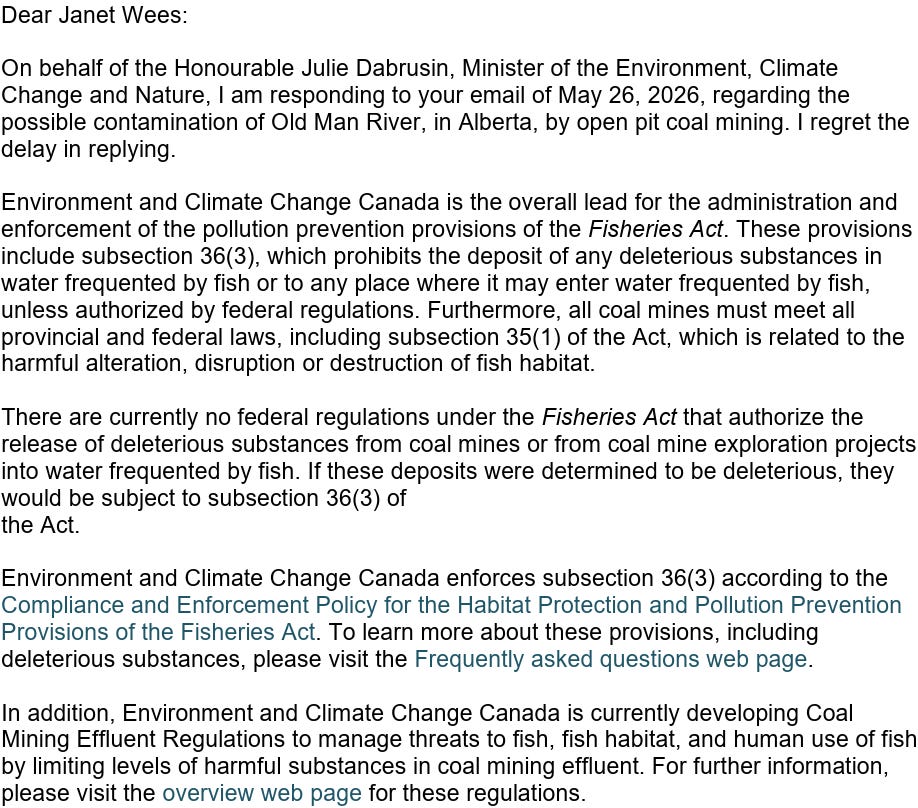
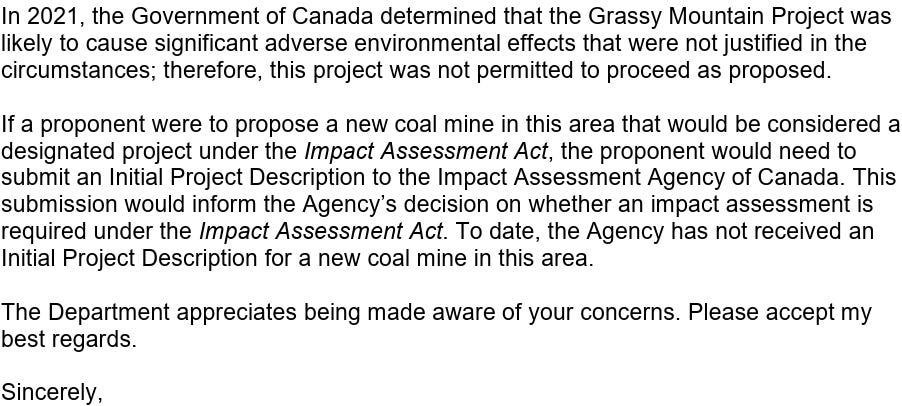
The reply:
_________________________________________________________
So the letter states that the Ministry “enforces” policy and the Fisheries Act makes the policy pretty clear. What is lacking then in this play is action and therein lies a lot of frustration. But, with the good guidance from our legal team we see gains in yardage and you can be a very big help with a donation to this cause by contributing to: https://www.gofundme.com/f/harleys-vision-4tvut or by e-transfer directly to <trevorstrust@thewatershedcrew.org> which will bypass the service fee. Thank you so much!