
The Temptations of the Sirens of Economic Song
Lorne Fitch, P. Biol.
One of the virtues of a liberal education is being exposed to the thoughts and messages of classical literature. Much has parallels with our modern world and lessons for it.
In The Odyssey, 24 books of ancient Greek literature attributed to Homer, ten years after the Achaean Greeks won the Trojan War, Ulysses, king of Ithaca, slowly returned home from Troy. The voyage home was, indeed epic by any definition.
A translated passage from book 12 of The Odyssey sees the hero Ulysses warn his men of an impending challenge:
She [Circe] said we must avoid the voices of the otherworldly Sirens; steer past their flowering meadow. And she says that I alone should hear their singing. Bind me, to keep me upright at the mast, wound round with rope. If I beseech you and command to set me free, you must increase my bonds and chain even tighter.
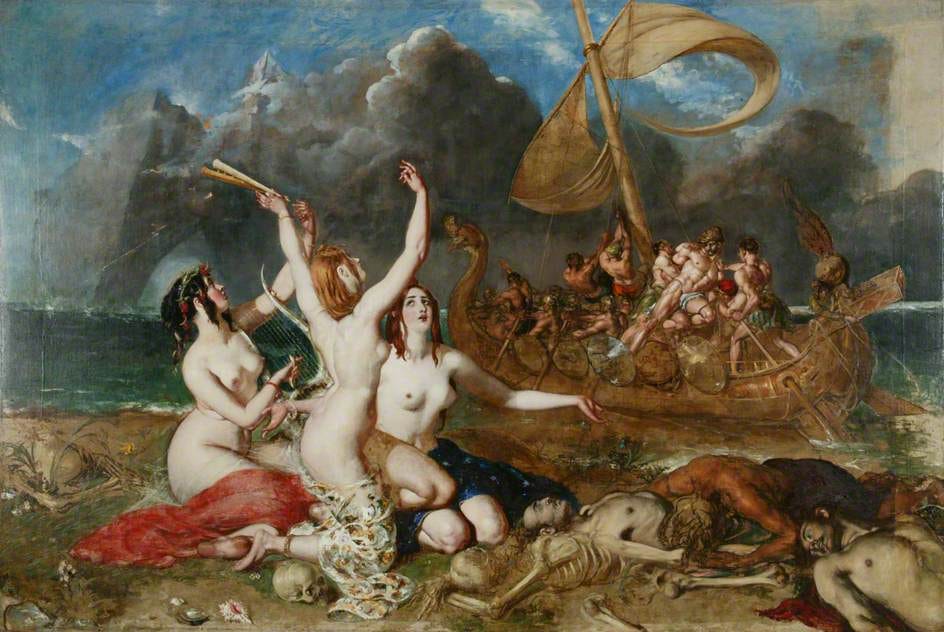
The Sirens were creatures often depicted as human-animal chimeras, half-woman, half-bird. They lured sailors to the rocky cliffs of their island home with beguiling voices which no man was able to resist. The Sirens and Ulysses is a large oil painting by the English artist William Etty, first exhibited in 1837, which provides a sense of the scene Homer created for Ulysses and his sailors.
On his decade-long journey home to Ithaca from the Trojan Wars, Ulysses steered past the island of the Sirens. On the advice of Circe, a lesser god and enchantress, he ordered his men to plug their ears with beeswax and tie him tightly with rope to the ship’s mast before they rowed the vessel with vigour past the island to escape.
On hearing the Sirens’ “honeyed song,” he asked his men to loosen the rope. Even mighty Ulysses could not resist their call—but his comrades wisely tightened his bonds even more. When they had passed the island and were beyond the Sirens’ call, the sailors removed the wax from their ears and untied their leader.
Homer’s epic story has a metaphoric message for us today. Just as the Sirens were beguiling temptresses with a song hard to resist, so too are the prevailing economic messages from governments and corporations. The verse and the chorus are about getting bigger, faster, with more jobs and higher government revenues. There is a palpable obsession about growing the economy, boosting the economy, diversifying the economy, and mostly kowtowing to the economy by liquidating more of our natural resources. We are told we have to, otherwise the country will wither and die. It’s an approach of damn the costs, full speed ahead.
It’s a focus on becoming rich (or richer) by increasing our standard of living (which will not be shared equitably across the board). Clearly the rich have money, but the wealthy have intact, resilient ecosystems, the full suite of ecological goods and services, and nurturing, caring communities. To get the former, you have to sacrifice much of the latter.
Blowing the tops off mountains to extract coal has the potential to make someone richer, but the costs, the liabilities, especially borne by those downstream and downwind aren’t reconciled in the economic song. Industrial-strength clear-cut logging seems very profitable, especially when companies dodge the rules of environmental protection, but downstream effects create sour notes. Plowing up more native grassland and irrigating it to plant potatoes to make into fries and chips is lucrative, but it’s a swan song for prairie rivers.
The financial benefits of floating in a sea of oil and gas has made us the envy of others, but we need to sing the blues over the impacts and costs of exacerbating climate change. Dealing with the liabilities seems a can kicked down the road, like the toxic ponds of the tar sands, where the most innovative solution seems to be to drain them into the Athabasca River.
It’s a pile-on of cumulative effects, ecological thresholds left behind in the dust of rapid development, wild species missing in action, irreconcilable environmental damage, and the sense from the lyrics of the economic song that all was good and necessary. Singers croon that what we have seen is only the beginning.
Where in the balance sheets of today’s economic Sirens are recorded the costs of getting rich? What are the costs of increased frequency and intensity of floods, drought, wildfires, heat domes, and other wicked weather linked to economic development? Or the biodiversity losses, water and air quality declines, and reduced landscape resilience to the changes brought on by getting rich?
Maybe plugging our ears with beeswax from the hype or tying ourselves to the mast of skepticism about the Sirens’ economic song would be wise to avoid blind surrender and submission. At least until we are past the island of tempting entrapments and on to songs of vision, restraint, and stewardship.
Thanks Homer, for the warning some 2800 years ago.
Lorne Fitch is a Professional Biologist, a retired Fish and Wildlife Biologist and a former Adjunct Professor with the University of Calgary. He is the author of Streams of Consequence, Travels Up the Creek, and Conservation Confidential.